
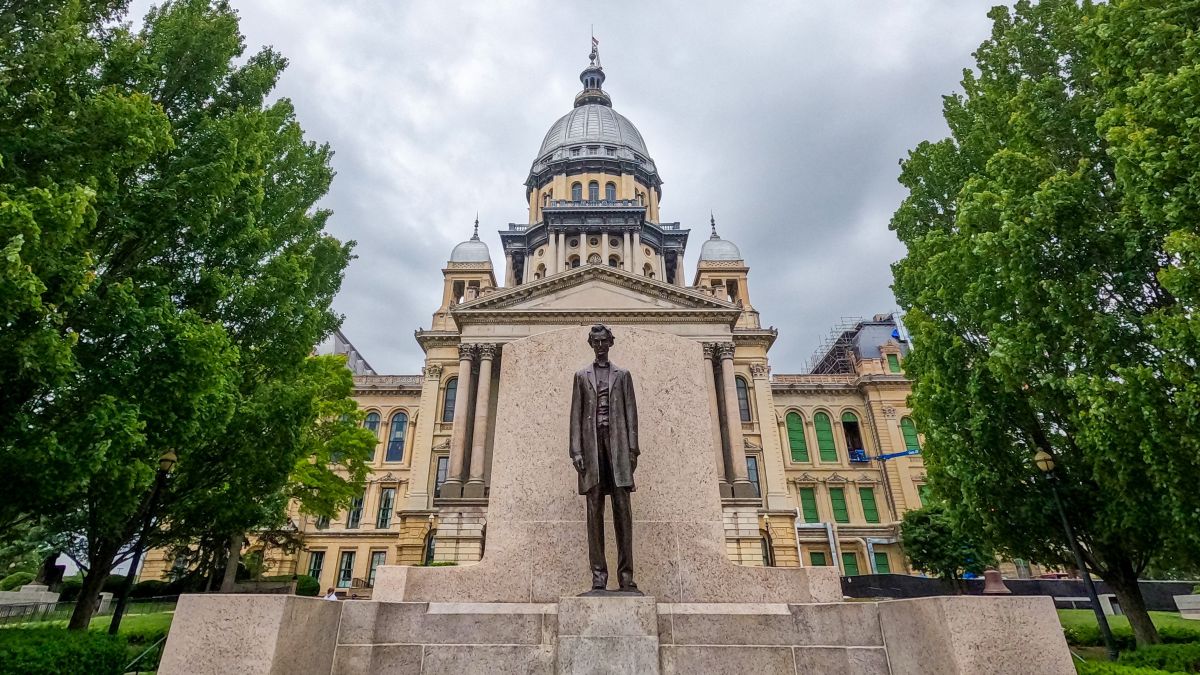
The finalized version of the Illinois budget for the fiscal year 2027 includes an attempt to tax sports prediction markets on a per-trade basis, similar to the state’s high-profile per-wager tax for regulated sports betting.
The $55.8bn budget approved on Monday morning includes various measures aimed at raising increased tax revenues for the state, including new taxes on products such as sports event contracts, cryptocurrency brokers, social media platforms, and more. It also creates an explicit licensing system for daily fantasy sports (DFS), bringing that vertical out of its grey area and taxing operators.
The plan and its implementation bill were introduced on Saturday night, and about 200 additional pages were added in the early hours of Monday before passing, reported state media. The specific revenue and tax changes legislation, Senate Bill 3019, was approved in the House of Representatives and the Senate with partisan Democrat votes.
The budget’s measures are set to go into effect on July 1, 2026.
Illinois defines sports contract trading as sports betting
Section 130-5 of SB 3019 amends Illinois’ Sports Wagering Act to add “exchange wagers” to the list of recognized legal sports wagers in the state.
“‘Exchange wager’ includes an agreement, contract, transaction, or swap that is offered, traded, or executed on a prediction market or exchange tied to a sporting contest or sporting event,” reads the new definition. In doing so, the bill puts sports event contract trading on the same keel as typical sports wagering markets, including:
- Moneylines
- Over-unders
- In-game bets
- Props
- Parlays
Illinois’ latest per-wager tax
Illinois made headlines in 2025 when it introduced the nation’s first-ever per-bet tax for state-regulated sports betting. Now, it is looking to do the same for prediction markets.
SB 3019 stipulates that each sports exchange wager will incur a “transaction tax”. For the first five million such wagers, operators would be taxed at 1.75% of the value of each trade; beyond the five million threshold, that doubles to 3.5%. The resultant tax revenue would be deposited each month into the state Sports Wagering Fund.
Meanwhile, another section of the tax bill reduces the initial licensing fee for a sports wagering operator from $20m to $15m for a four-year license, with renewal fees set at $1m. The bill does not explicitly state whether that applies to would-be prediction market licensees.

IL embroiled in CFTC court fight
Theoretically, the budget’s exchange wagering measures mean that any platform offering sports contract trading in the state would fall under the purview of state regulators. However, the feasibility of Illinois actually enacting and enforcing taxes on prediction markets is uncertain, as court battles continue to rage around the country focused on the very issue of state vs. federal authority over event contract trading.
The Commodity Futures Trading Commission (CFTC) announced at the start of April that it had sued Illinois Gov. JB Pritzker and Attorney General Kwame Raoul in federal court, accusing the state (along with Arizona and Connecticut) of “aggressive and overzealous” attempts to rein in federally regulated prediction markets.
More than a year ago, in spring 2025, Illinois sent cease-and-desist letters to Kalshi, Robinhood, and Crypto.com in an attempt to shut down the companies’ sports event contract trading within the state.
DFS to be regulated and taxed at 15%
Meanwhile, the budget’s taxation bill also outlines a new firm regulatory framework for DFS under the oversight of the Illinois Gaming Board. Fantasy sports will be classed as their own form of gaming, distinct from sports betting, and are not included in the state’s list of sports wagering products.
The state would issue two-year licenses to approved DFS operators and tax them at 15% of their adjusted gross fantasy contest receipts, which the bill defines as the total sum of the entry fees collected from Illinois participants minus the share of cash prizes paid out. The budget forecasts that the new tax on DFS will raise $5m in FY27.
Democratic Rep. Curtis Tarver said that the licensing and taxation structure had the support of the DFS industry, including operators such as PrizePicks.
Illinois will require all approved DFS operators to implement stringent player protection protocols, including:
- Age and identity verification
- Geolocation
- Anti-money laundering processes